Do You Need a Digitech on Production Sets?
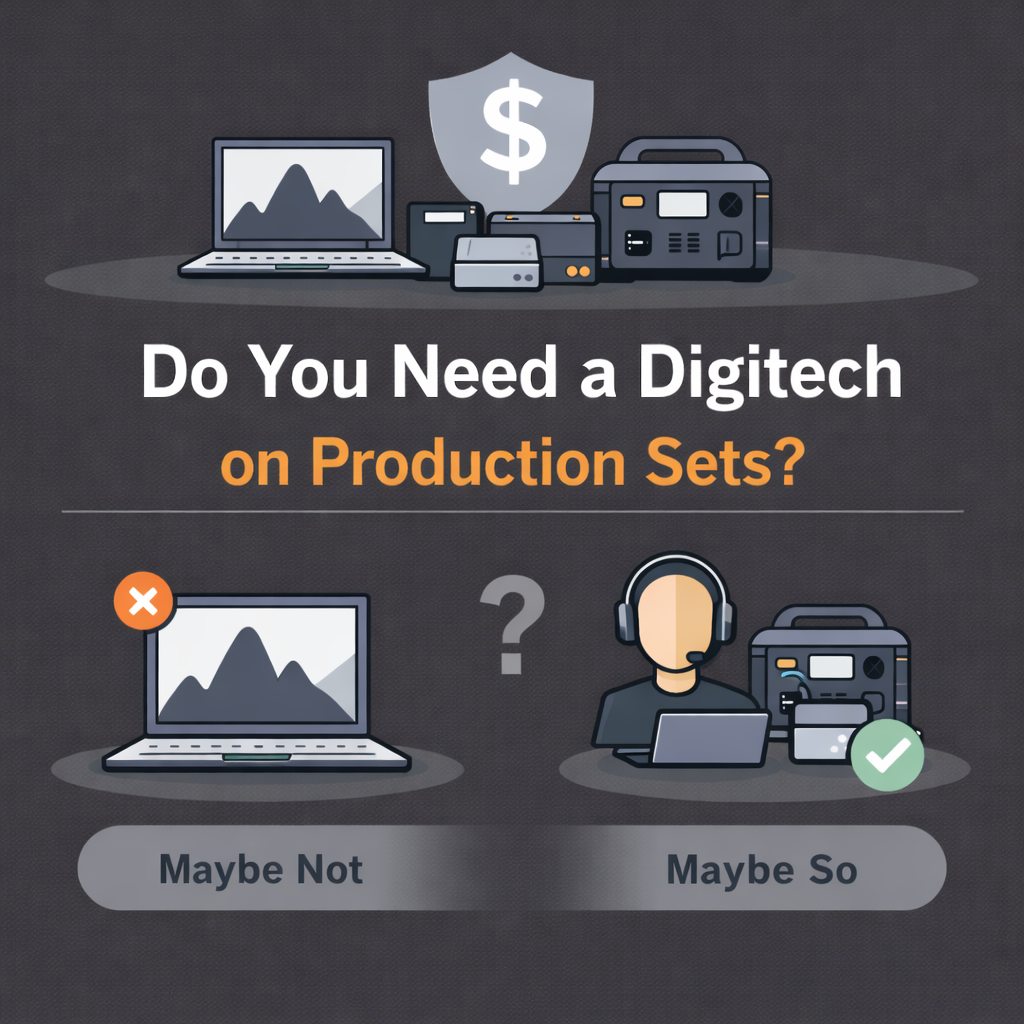
Depends. Here’s How to Know.
On many commercial photography and production sets, the role of a Digital Technician (Digitech) is either seen as essential—or completely optional. The truth lives somewhere in between.
Not every shoot needs a digitech.
But when a shoot does need one, the absence is felt immediately.
If you’re a producer, photographer, creative director, or brand team wondering whether bringing on a digitech makes sense for your next project, this guide will help you decide.
What Does a Digitech Actually Do?
At a high level, a digitech is responsible for everything that happens to an image from the moment it leaves the camera.
That typically includes:
Tethered capture and file management
Live image review for clients and creative teams
Exposure, focus, and color monitoring
On-set backups and data security
Troubleshooting technical issues in real time
Supporting the photographer so they can stay creative and focused
Think of a digitech as the bridge between creative intent and technical execution.
When You Probably Need a Digitech
Here are some strong indicators that hiring a digitech will benefit your production.
1. You’re Shooting Tethered (Especially With Clients On Set)
If images are being viewed live—on a monitor, iPad, or video village—a digitech helps ensure:
The feed is stable
Files are named and organized correctly
No images are lost or overwritten
The photographer isn’t distracted by tech issues
When clients are watching images appear in real time, confidence and consistency matter.
2. The Shoot Is Commercial or Brand-Facing
Campaigns, ad work, e-commerce, lifestyle branding, and editorial shoots all tend to benefit from:
Color-accurate monitoring
Immediate quality control
Clean handoff to post-production
In these environments, mistakes are expensive. A digitech helps prevent them.
3. The Photographer Needs to Stay in Flow
Photographers do their best work when they’re not:
Managing laptops
Renaming files
Troubleshooting cables
Stressing about backups
A digitech protects the photographer’s mental bandwidth—especially on longer or higher-pressure shoot days.
4. The Crew Is Larger Than Just the Photographer
Once you add:
Producers
Creative directors
Agency partners
Brand stakeholders
…the technical demands multiply. A digitech helps keep everyone aligned without slowing the shoot down.
When You Might Not Need a Digitech
There are plenty of scenarios where a digitech isn’t strictly necessary.
1. Small, Personal, or Editorial Shoots
If it’s:
A simple portrait session
Natural light
No tethering
No client review on set
The photographer can often manage everything themselves.
2. Run-and-Gun or Documentary-Style Work
Fast-moving shoots with minimal gear and no live review usually don’t benefit from a full digitech setup.
In these cases, mobility outweighs monitoring.
3. Budget-Constrained Projects
Sometimes the choice isn’t ideal—it’s practical. If the budget simply doesn’t allow for a digitech, the key is acknowledging the trade-offs and planning accordingly.
The Hidden Cost of Not Hiring a Digitech
Even when budgets are tight, it’s worth asking:
What happens if files are corrupted?
What if color issues aren’t caught until post?
What if the photographer is pulled out of rhythm all day?
Often, a digitech doesn’t just add cost—they reduce risk.
A Simple Rule of Thumb
Ask yourself these three questions:
Are images being reviewed live on set?
Is this work client- or brand-facing?
Would technical issues slow down or stress the team?
If you answered yes to two or more, a digitech is probably a smart call.
Final Thoughts
Hiring a digitech isn’t about over-staffing a set—it’s about supporting the work.
When the production calls for it, a good digitech helps the shoot move faster, smoother, and with more confidence—freeing everyone else to focus on what they do best.
And when the production doesn’t call for it? That’s okay too. Knowing the difference is what separates thoughtful productions from chaotic ones.